
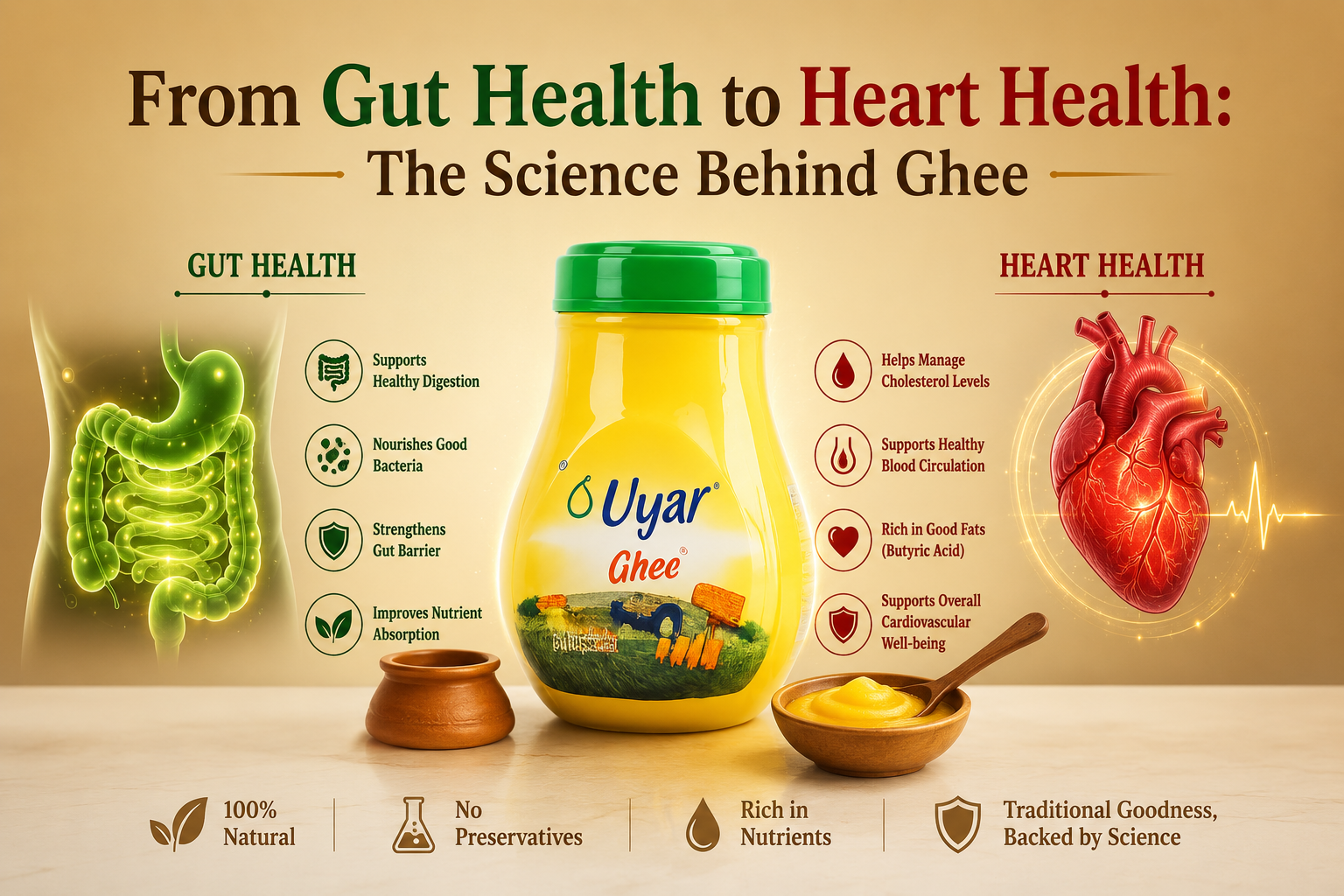
Ghee, a staple of traditional Indian cuisine, is gaining renewed scientific attention. Cow ghee contains saturated fats, short- and medium-chain fatty acids, conjugated linoleic acid (CLA), butyric acid, and fat-soluble vitamins A, D, E, and K.
Gut Health: Butyric acid — a key component of ghee — maintains intestinal barrier integrity by restoring tight junction proteins, enhancing Paneth cell function, and exerting anti-inflammatory effects that combat the diffuse spread of gut inflammation. A 2023 study on branched-chain fatty acids from ghee found notable impacts on lipid metabolism pathways and intestinal microbiota composition in experimental models.
Heart Health: A 2025 systematic review and meta-analysis (Progress in Nutrition) analyzing 19,948 participants across 10 clinical and epidemiological studies found that ghee intake had neutral to positive effects on lipid profiles, with no statistically significant increase in coronary heart disease risk. Supporting this, moderate ghee consumption has been shown to lower total LDL and VLDL cholesterol while raising HDL cholesterol, and its antioxidant properties help neutralize free radicals that drive vascular inflammation and atherosclerosis.
Each article keeps the same layout, navigation flow, and styling so readers get a consistent experience across the whole site.